





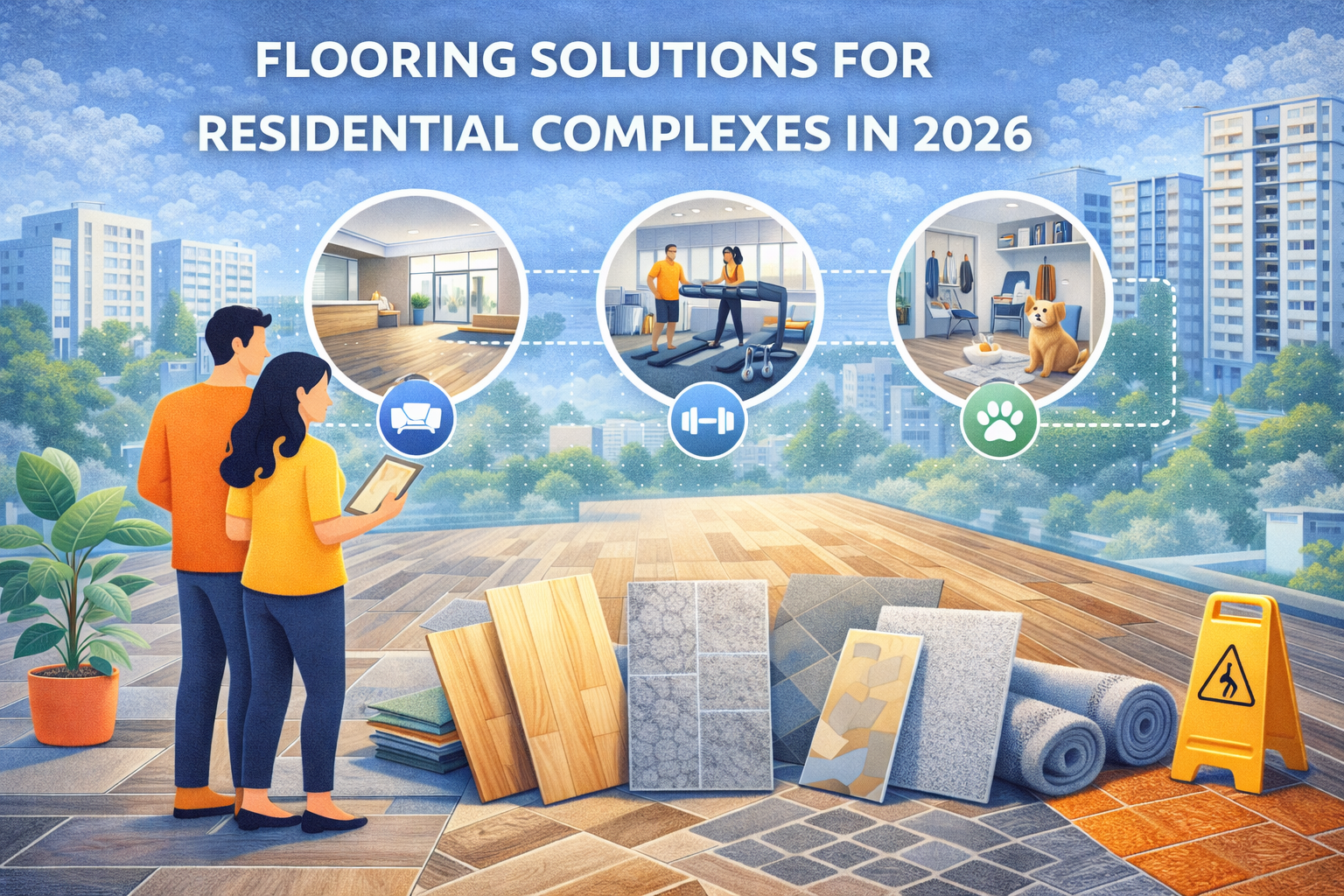
Residential complexes such as apartment buildings, condominiums, and multi-family housing developments require flooring solutions that balance durability, aesthetics, and long-term value. In 2026, flooring choices for residential complexes are increasingly driven by performance, ease of maintenance, tenant comfort, and modern design expectations. Property developers and managers are looking for flooring that enhances living spaces while standing up to daily wear across shared and private areas.
Choosing the right flooring for a residential complex plays a critical role in tenant satisfaction, operational efficiency, and overall property value. From individual units to common areas, flooring must perform consistently while maintaining a cohesive and attractive appearance.
Durability for High-Traffic Living Environments
Residential complexes experience constant foot traffic, especially in hallways, stairwells, entryways, and shared amenities. Flooring materials must withstand heavy use without showing premature wear. In 2026, luxury vinyl plank (LVP), luxury vinyl tile (LVT), tile flooring, and commercial-grade carpet are among the most commonly selected options for these environments.
Luxury vinyl flooring remains a top choice due to its durability, scratch resistance, and ability to handle moisture. Its rigid core construction and enhanced wear layers make it ideal for high-traffic areas while maintaining a residential look that tenants appreciate.
Comfort and Noise Reduction for Tenant Satisfaction
In multi-family housing, noise control is a major consideration. Flooring solutions that support sound absorption help reduce noise transfer between units and common spaces. Carpet and carpet tiles continue to be widely used in bedrooms, living areas, and corridors due to their acoustic benefits.
In 2026, many residential complexes are combining hard surface flooring with sound-reducing underlayments to achieve durability without sacrificing comfort. This approach supports quieter living environments and improves tenant experience.
Low-Maintenance Flooring for Property Management Efficiency
Property managers prioritize flooring that is easy to clean, repair, and replace. Low-maintenance flooring reduces long-term operating costs and minimizes downtime between tenants. Vinyl and tile flooring require simple cleaning routines and resist stains, spills, and moisture damage.
Carpet tiles are especially popular in common areas because individual tiles can be replaced if damaged, extending the overall lifespan of the flooring and reducing replacement costs.
Design Trends for Residential Complex Flooring in 2026
Flooring design trends for residential complexes in 2026 focus on modern, neutral aesthetics that appeal to a wide range of tenants. Warm wood tones, soft greys, and natural stone looks create inviting spaces that feel both contemporary and timeless.
Wide-plank vinyl and wood-look tile are frequently used to achieve a high-end appearance while maintaining durability. Subtle patterns and textures are also being incorporated in corridors and common areas to add visual interest without overwhelming the space.
Flooring for Common Areas and Shared Amenities
Common areas such as lobbies, fitness centers, lounges, and laundry rooms require flooring that can handle constant use while maintaining visual appeal. Tile and luxury vinyl flooring are commonly selected for these spaces due to their moisture resistance, ease of maintenance, and long lifespan.
In fitness centers and recreational areas, slip-resistant flooring and cushioned surfaces are becoming more common in 2026 to support safety and comfort.
Sustainability and Long-Term Value
Sustainability continues to influence flooring decisions in residential developments. Many builders and property owners are choosing flooring made with recycled materials, low-VOC finishes, and environmentally responsible manufacturing processes. These choices support healthier indoor environments and align with green building standards.
Durable flooring that lasts longer and requires fewer replacements also contributes to sustainability by reducing material waste over time.
Cost Control Through Smart Flooring Selection
Residential complexes require flooring solutions that deliver value across large square footage. Selecting durable, versatile materials that work across multiple spaces helps streamline purchasing and installation. Using consistent flooring styles throughout units and common areas also simplifies maintenance and creates a cohesive property aesthetic.
Wholesale access to residential flooring allows developers and contractors to manage budgets effectively while maintaining quality standards.
Partnering With the Right Flooring Provider
Choosing the right flooring partner is essential for residential complex projects. An experienced provider understands the unique demands of multi-family housing and helps recommend flooring solutions based on traffic levels, maintenance needs, and design goals.
At Yes Floors, residential complex flooring solutions are designed to support apartments, condominiums, and multi-family developments with durable, stylish, and cost-effective options. From private living spaces to shared amenities, the right flooring choices help create comfortable, attractive, and long-lasting residential environments in 2026 and beyond.